Market Dashboard
Returns from January 1, 2026 to June 30, 2026.
Performance Trends
Average revenue growth and margin outlook by sub-sector.
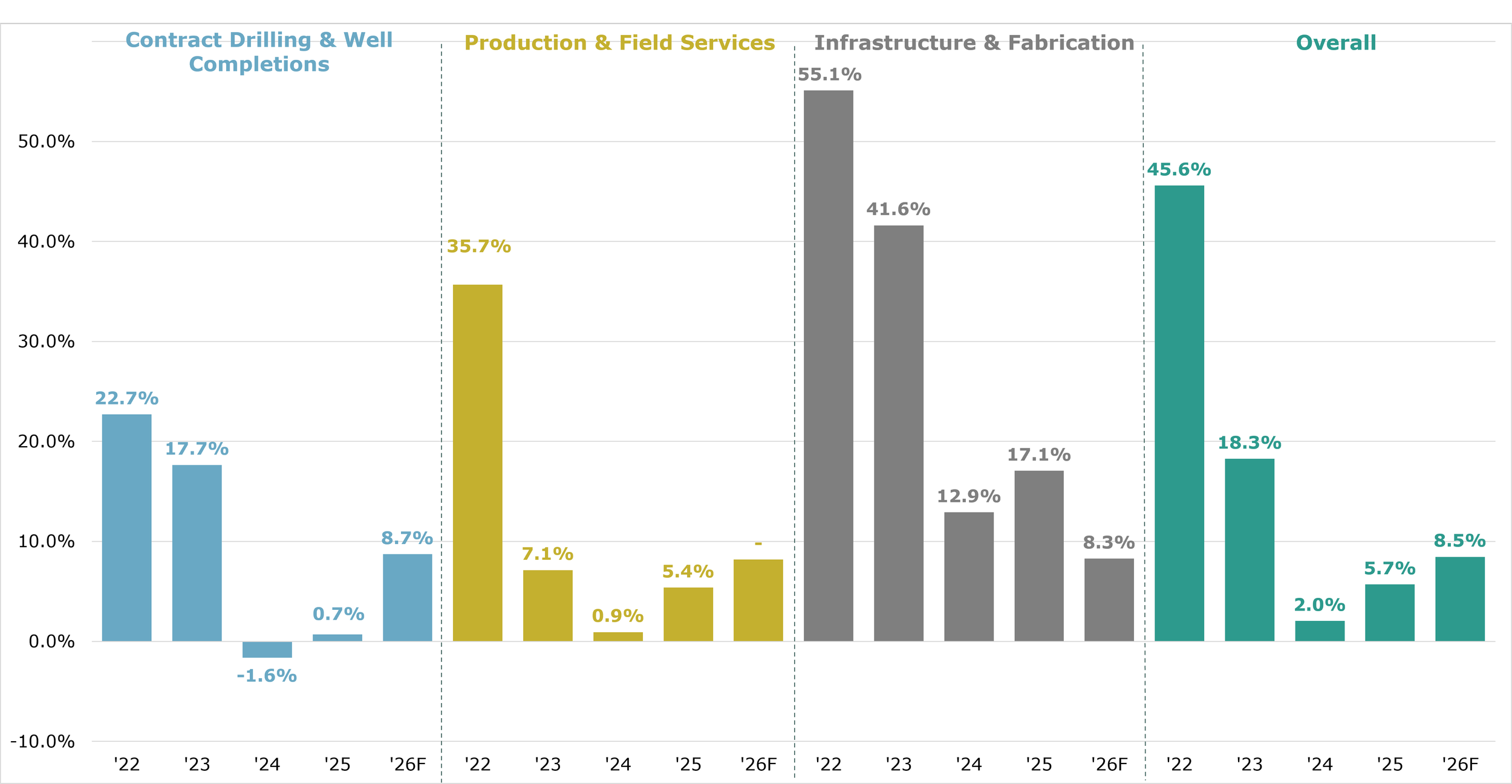
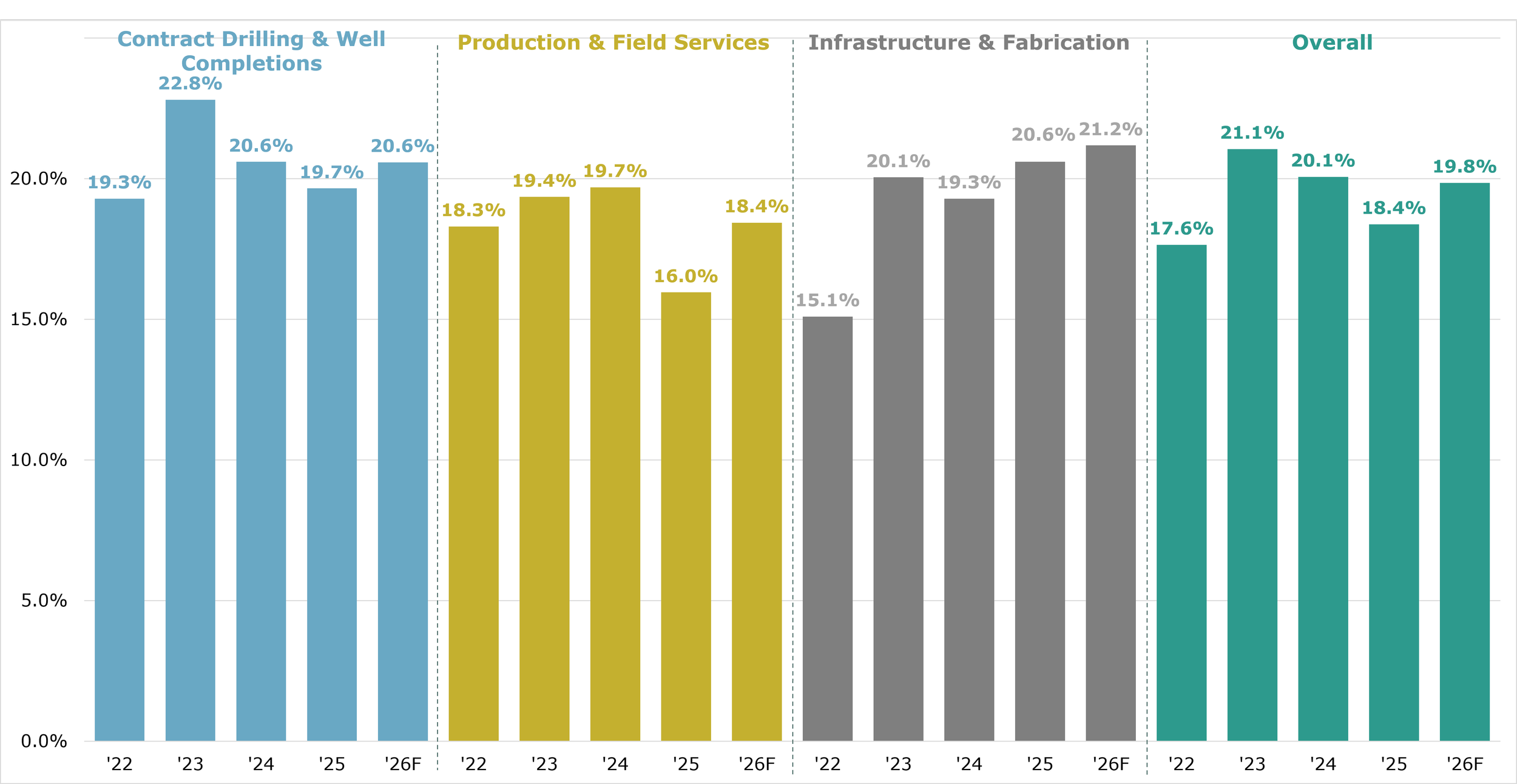
Source: LSEG Workspace.
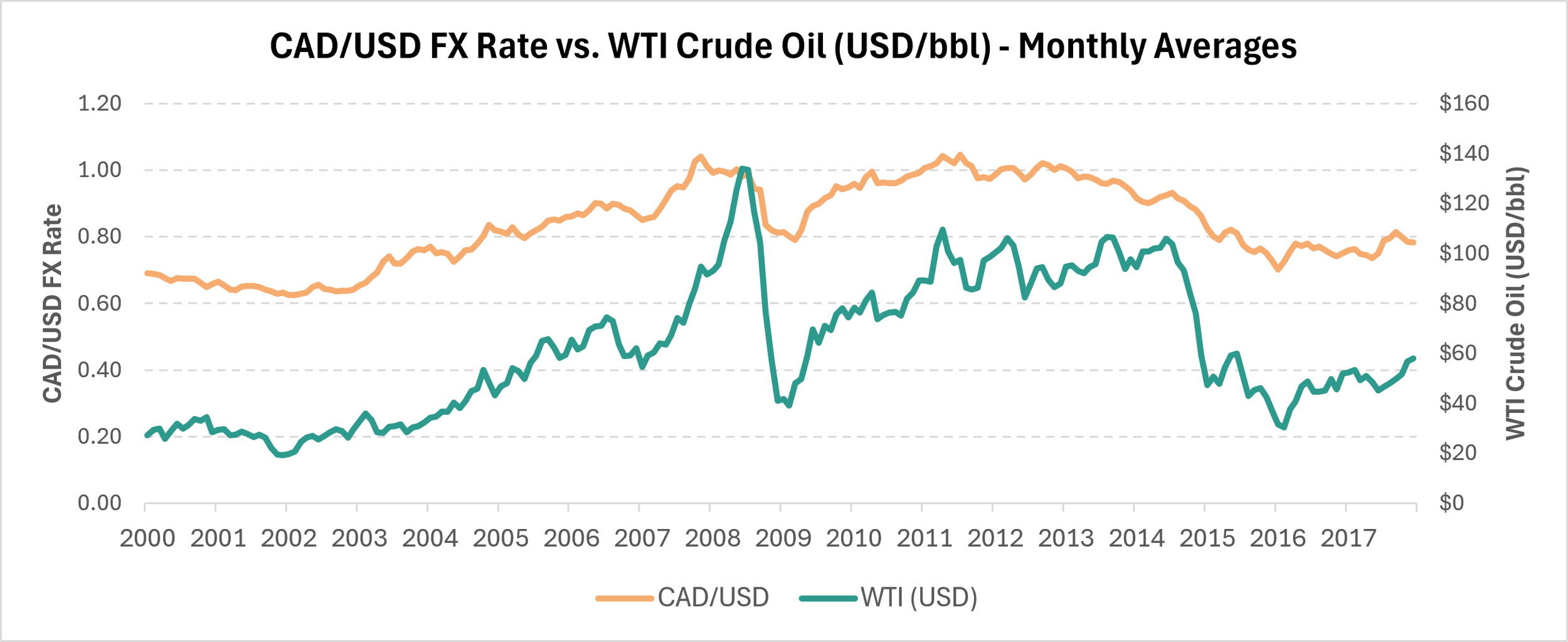
Higher Oil, Weaker Loonie. Why the Old Rule Broke.
For decades, economists could read the strength of the Canadian dollar from global oil prices. The higher oil prices were, the stronger the Loonie. However, this relationship has been fractured in more recent years. We dive into what has changed, what's driving the change, and what it means for your business through 2026 and entering 2027.
Current: The Divorcing Couple
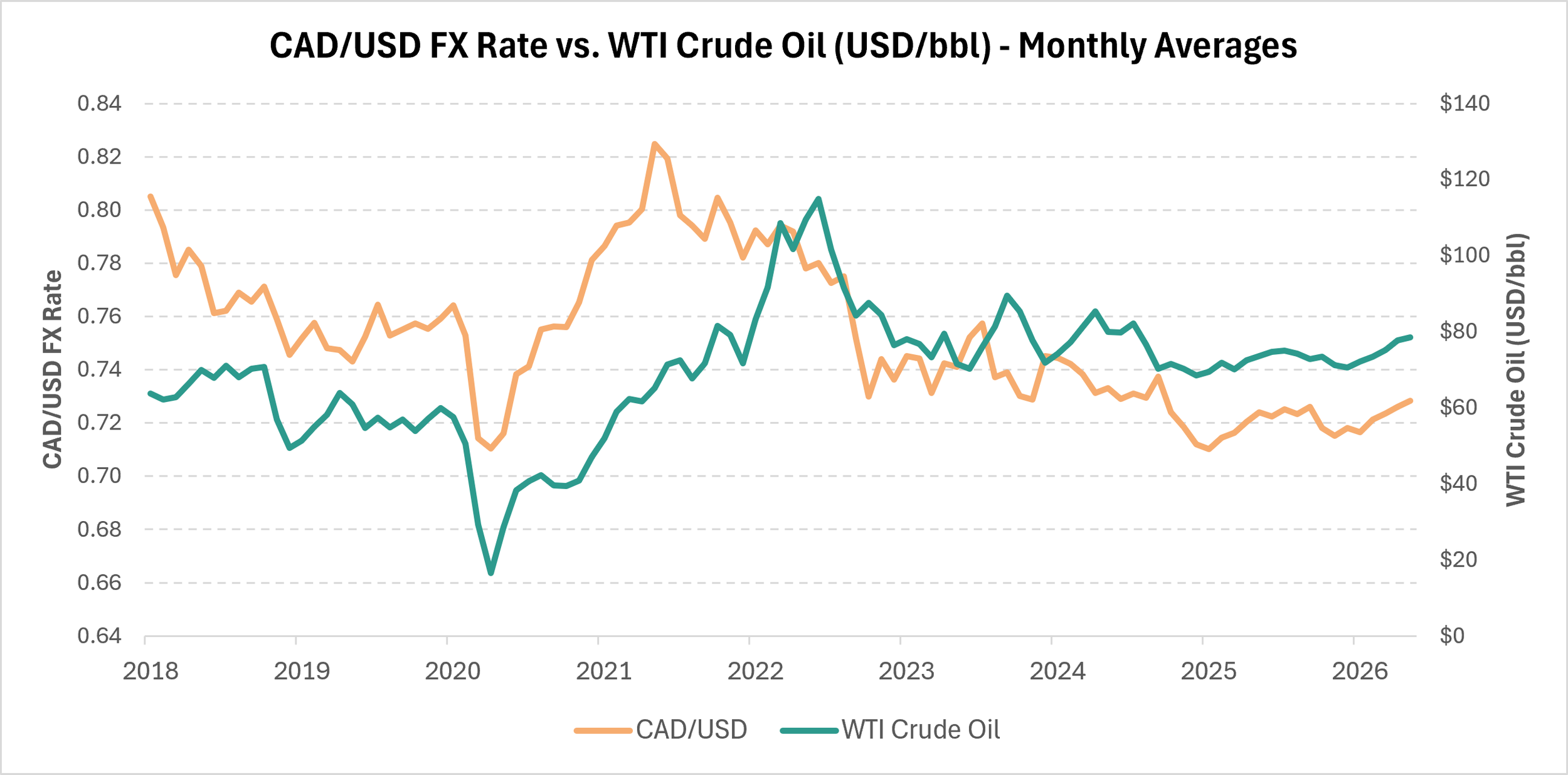
The CAD/USD FX rate and WTI crude oil pricing were the perfect market couple. Then, the relationship broke in 2018.
Why the Correlation Broke
Below, we review three factors behind the Loonie decoupling from oil prices since 2018:
With the CAD-USD correlation shifted, Canadian energy services providers can leverage the discounted dollar to pursue growth in the U.S. market — there is strong demand abroad, especially in the U.S., for Canadian oilfield expertise.
There is also a stronger case for FX hedging today: the natural hedge of "higher oil, stronger CAD" is gone. Hedging U.S. labour and raw-material procurement helps protect margins from FX uncertainty.
Opportunities on the Horizon
For years, the Canadian energy sector has operated under a cloud of "false hope." It has navigated regulatory deadlocks, cancelled projects, and tightening environmental policies. However, we observed several developments during Q2 that appear to be converting plans into commercial reality.
Select Merger & Acquisition Transactions
Notable Canadian energy services transactions, Q2 2026.
Whitehorn Capital
Sale of business, merger & acquisition, and financing advisory for Western Canadian business owners navigating growth, transition, and succession. Helping clients achieve their transaction objectives since 2008.
Head Office
Address: Whitehorn Capital
3332 20 St SW Suite 406,
Calgary, AB T2T 6S1
Phone: 403-680-4266
Follow us on social media: